Tools for parents
Little ideas to help you calm down, settle, understand yourself and believe in yourself
Every tool comes from the book. They are simple and short, and they work best when practised together in calm moments, before they are needed.

Tools for parents
-
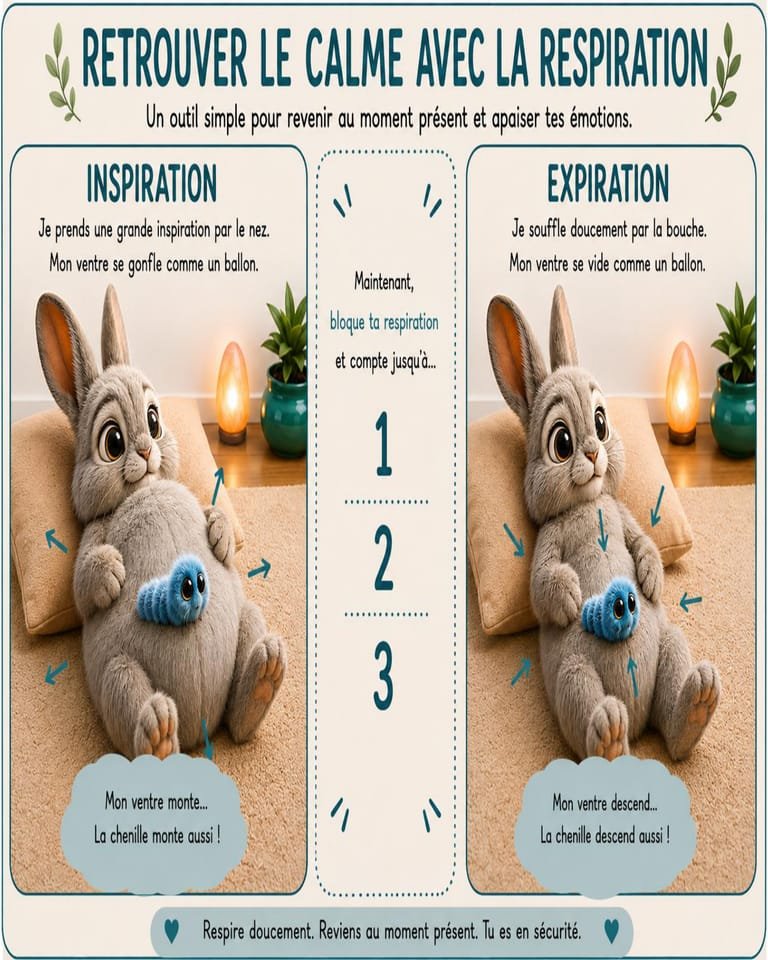
Finding calm with breathing
Lying on their back, your child places a plush toy on their tummy. Breathing in through the nose, the tummy fills like a balloon and the toy rises. They hold gently while counting to three, then blow out through the mouth and the toy comes back down.
Page 19
-
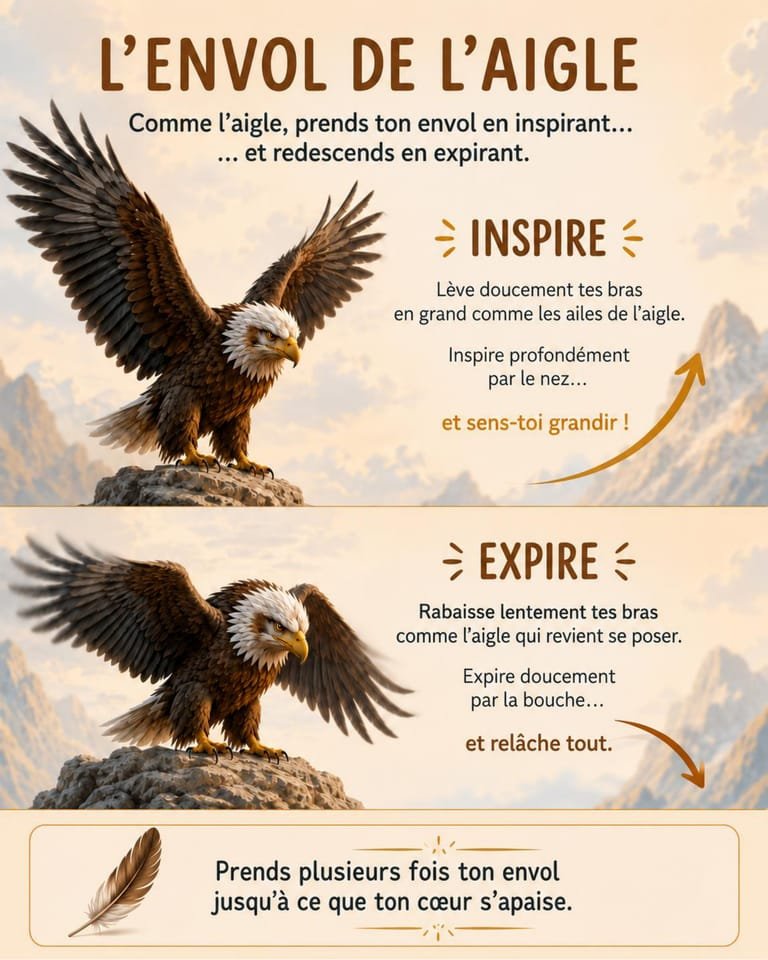
The eagle takes flight
Breathing in through the nose, slowly raise your arms like the eagle’s big wings and feel yourself grow. Breathing out through the mouth, lower them like the eagle landing again. Repeat until the heart settles.
Page 20
-
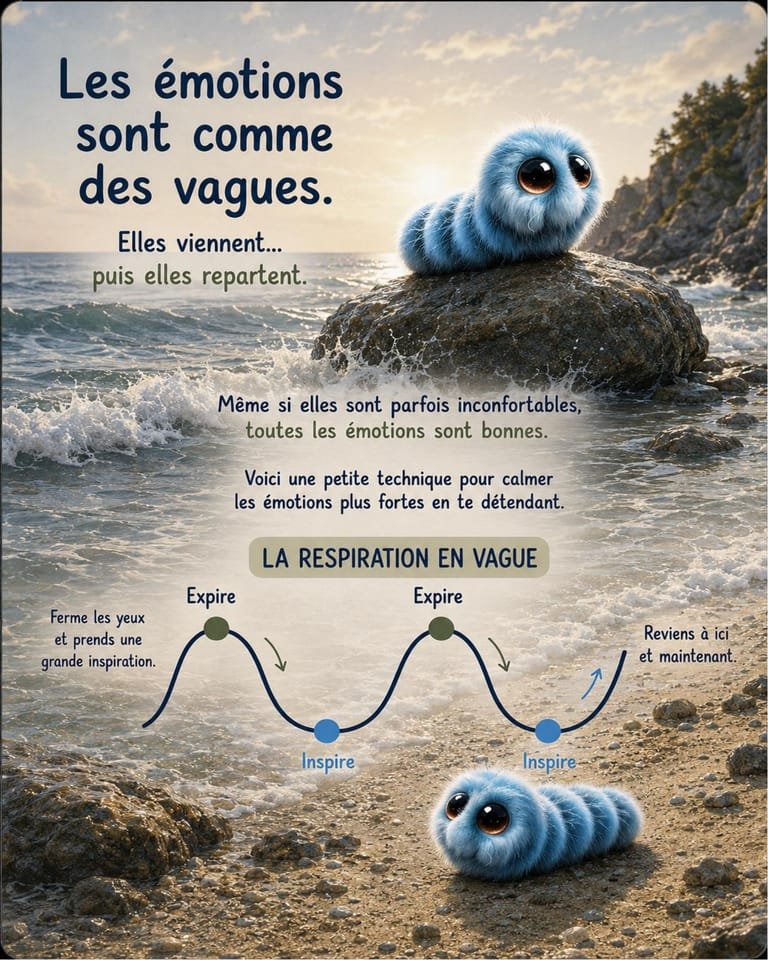
Wave breathing
Emotions are like waves: they come, then they go. Close your eyes and trace a wave with your finger, breathing in as it rises and out as it falls.
Page 21
-
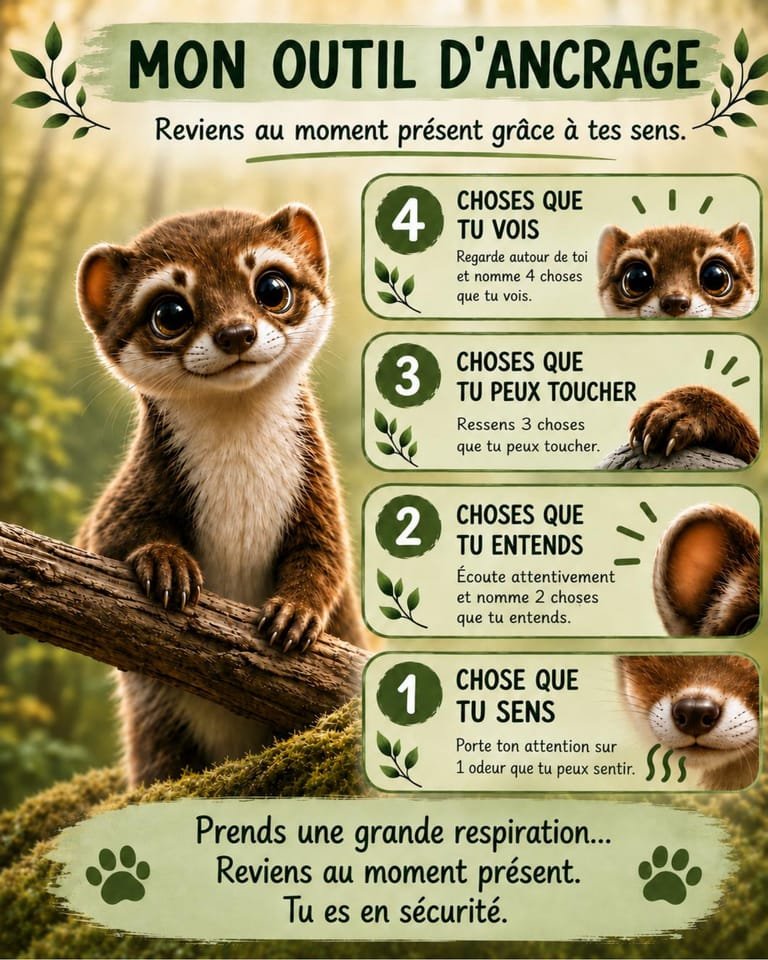
My 4, 3, 2, 1 grounding tool
To come back to the present through the senses: 4 things I see, 3 I can touch, 2 I hear, 1 smell I notice.
Page 22
-
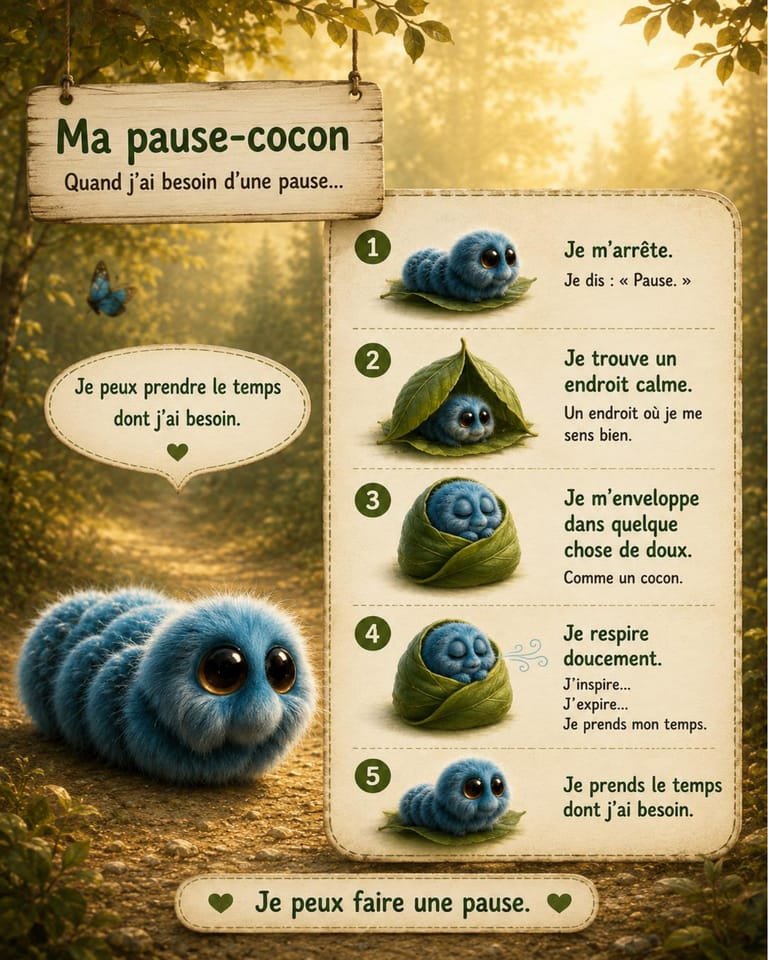
My cocoon pause
I stop and say “Pause.” I find a quiet spot. I wrap myself in something soft, like a cocoon. I breathe gently. I take the time I need.
Page 27
-

The keeper of thoughts
When a thought or a feeling is too strong and stays in the head or the heart, your child can hand it to the old owl. He will take care of it, and the heart can rest.
Page 24
-
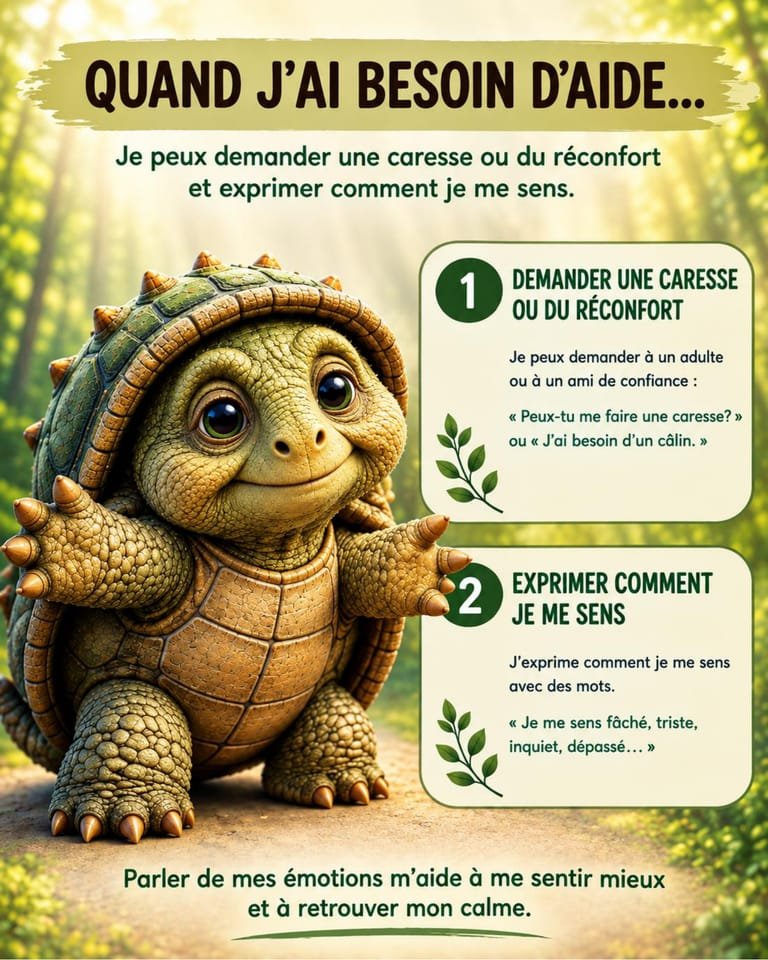
When I need help
Two gestures to learn like the turtle: asking a trusted adult for a cuddle or comfort, then putting feelings into words (angry, sad, worried, overwhelmed).
Page 23
-

On the inside: the colour of my heart
Red, orange, yellow, green, blue, purple, pink, white or black: your child picks the colour of their heart, then you help them find a word for the feeling.
Page 25
-

My inner weather
Sunshine, a few clouds, rain or a storm? Taking the time to notice how you feel. Every kind of weather is allowed to be here.
Page 26
-
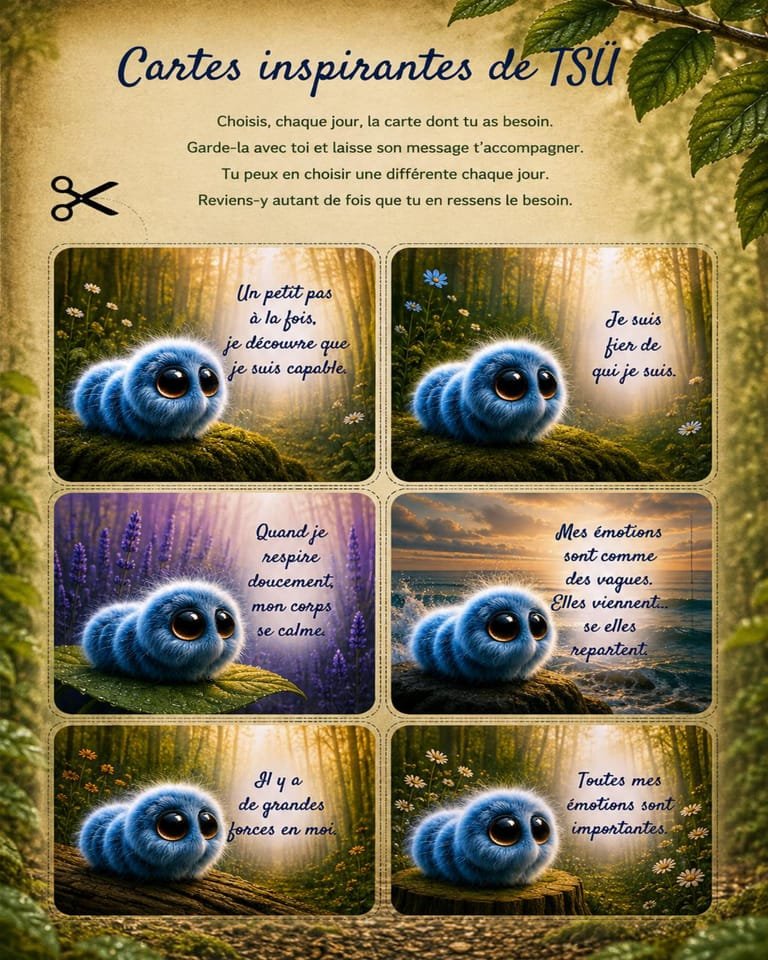
Inspiring cards
Each day, your child picks the card they need and keeps it close. Six affirmations, plus six blank cards to personalize.
Page 29
-
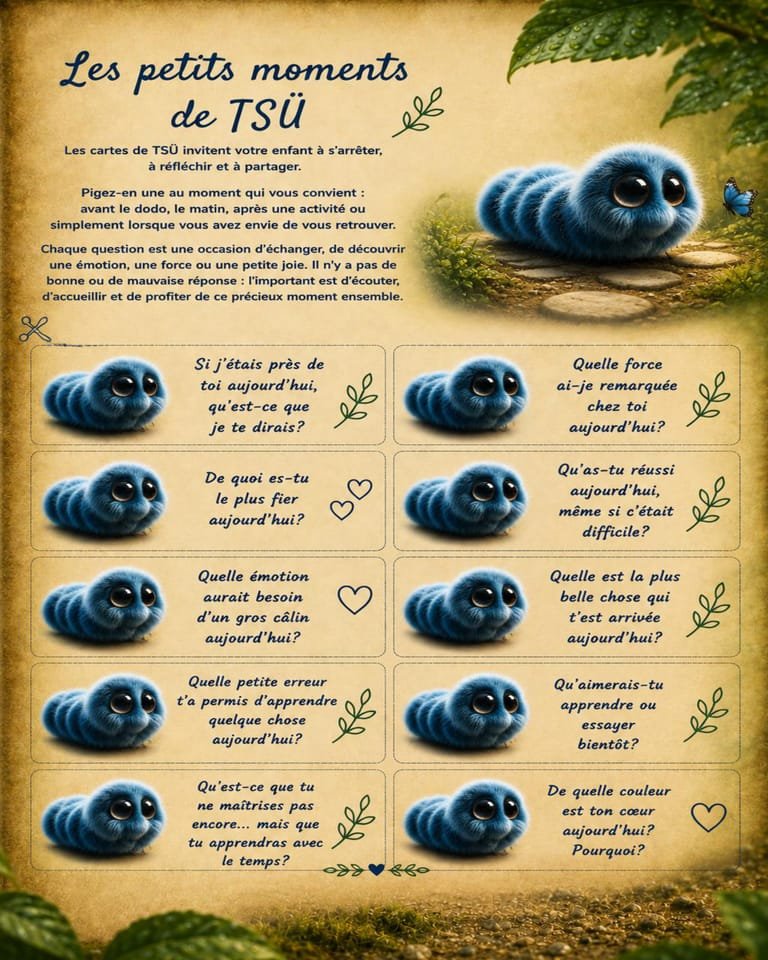
TSÜ’s little moments
Ten questions to pause, reflect and share. There are no right or wrong answers: what matters is listening and welcoming.
Page 33
-

A gentle moment to welcome the night
Before closing your eyes, everyone thinks of good things from their day: what are you most proud of? What made you feel good? What made you smile?
Page 17
-

TSÜ’s hug
A hand on the heart. A deep breath. Eyes gently closed. Then repeat: I am loved. I am capable. I am enough.
Page 35
-
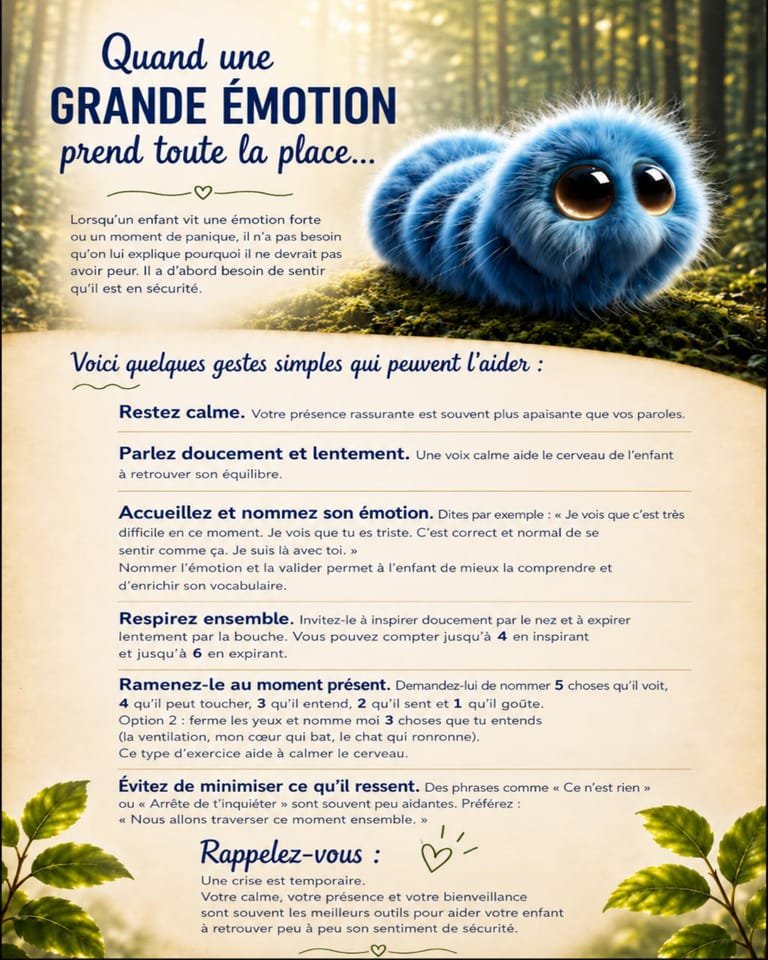
When a big emotion takes up all the room
For parents: stay calm, speak softly and slowly, welcome and name the emotion, breathe together, come back to the present, and avoid minimizing what your child feels.
Page 16
-
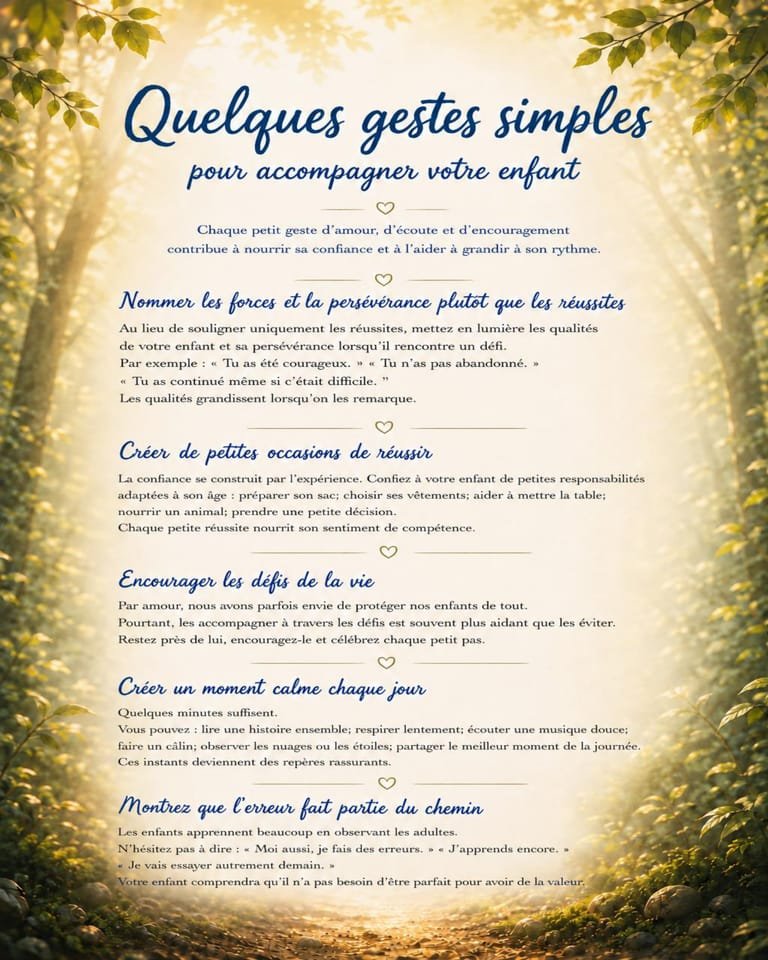
A few simple gestures
Name strengths and perseverance rather than results, create small chances to succeed, encourage challenges, offer a calm moment every day and show that mistakes are part of the path.
Page 15
Breathe with TSÜ
Emotions are like waves
They come... and then they go. Take a minute with your child: TSÜ rises with the wave as you breathe in, and comes back down as you breathe out.
4 seconds breathing in through the nose, 6 seconds breathing out through the mouth, three times.

Get comfortable. When you’re ready, press Start.

Let’s try the 4, 3, 2, 1 grounding tool
Do it together, out loud, when worry takes up too much room.
-
4 things you see
Look around you and name 4 things.
-
3 things you can touch
Feel 3 things with your hands or your body.
-
2 things you hear
Listen carefully and name 2 sounds.
-
1 thing you smell
Focus your attention on 1 smell.
Take a deep breath... Come back to the present moment. You are safe.
What’s your weather today?
Pick a card with your child. Each kind of weather leads to a tool from the book.
For parents
Take the chance to name what feels good: “I can see you’re happy. What put sunshine in your day?” Good moments deserve to be noticed too.
Suggested tool : TSÜ’s little moments (page 33). A gentle question at dinner or bedtime to celebrate the day.
For parents
There’s no need to understand everything right away. Stay close, speak softly, and help your child come back to the present moment.
Suggested tool : My 4, 3, 2, 1 grounding tool (page 22). Naming what you see, touch, hear and smell to come back to here and now.
For parents
Sadness needs room and presence, not solutions. “I can see you’re sad. That’s okay. I’m here.”
Suggested tool : TSÜ’s hug (page 35). A hand on the heart, a deep breath, and three sentences: I am loved. I am capable. I am enough.
For parents
During the storm, your calm is the shelter. Say little, speak slowly, and offer a pause rather than a lesson. The talk can come later.
Suggested tool : My cocoon pause (page 27). I stop, I find a quiet spot, I wrap myself in something soft and I breathe.
Tools
TSÜ’s little moments
A question to chat about at dinner, in the car or at bedtime.

If I were with you today, what would I tell you?

A free printable TSÜ card
Sign up and get a card to cut out and use with your child this week.
These tools support children in everyday life, but they don’t replace professional help. If your child’s distress is intense or persistent, talk to your doctor, a psychologist or a psychoeducator. In Quebec, you can reach Info-Social by dialing 811.